

How is 3D printing changing the future of footwear? Explore the evolution of 3D printed shoes, winter-inspired designs, and PollyFab's Stride Series.
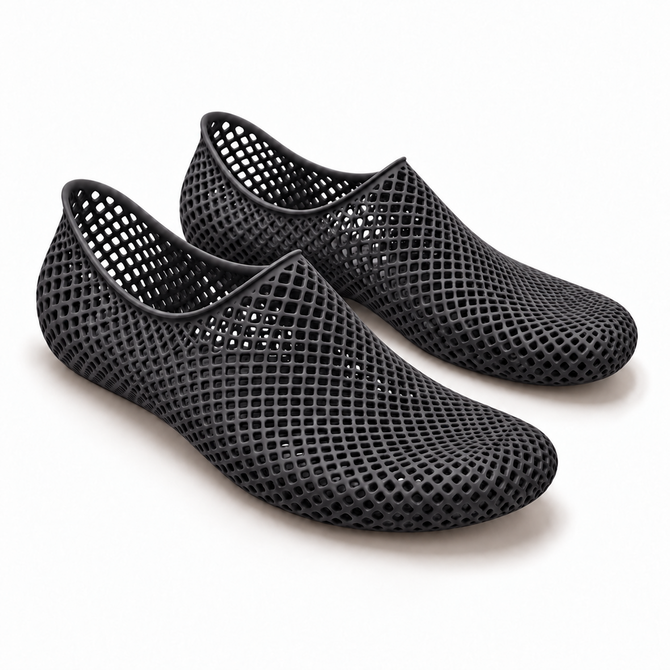
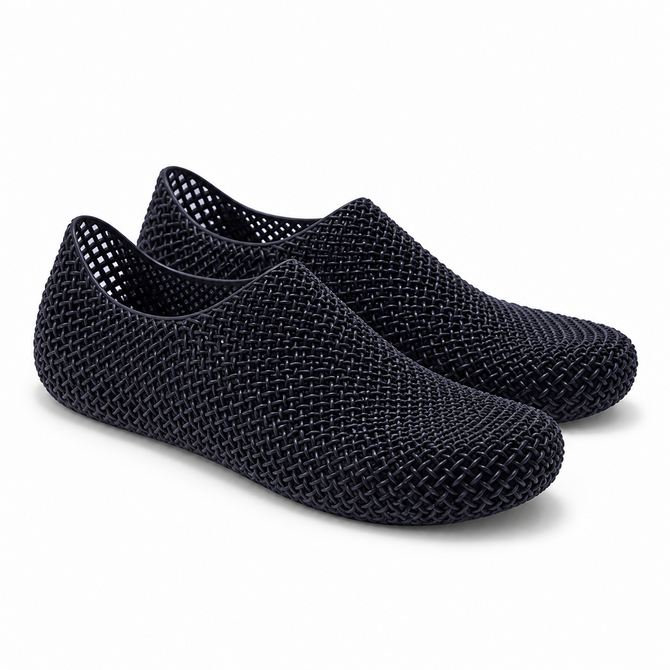
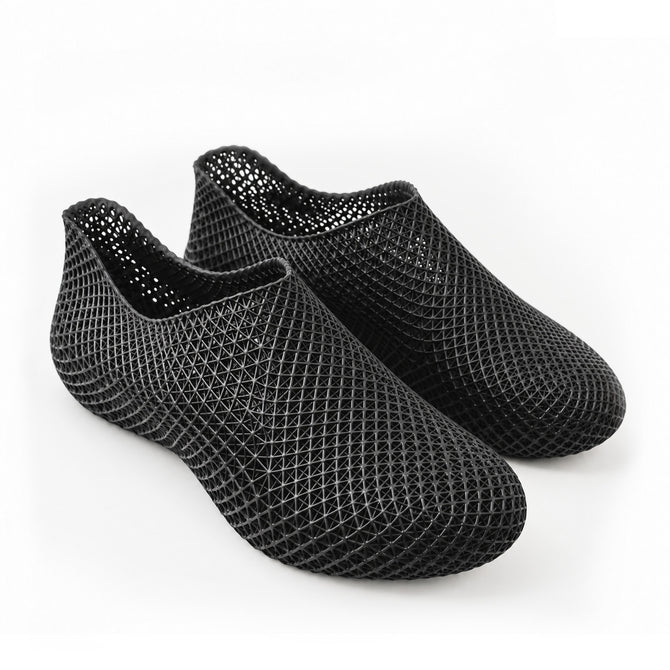
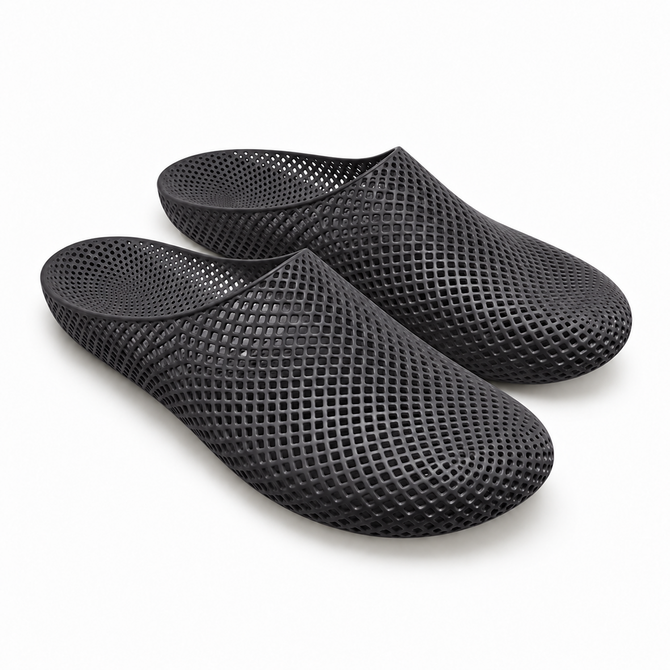
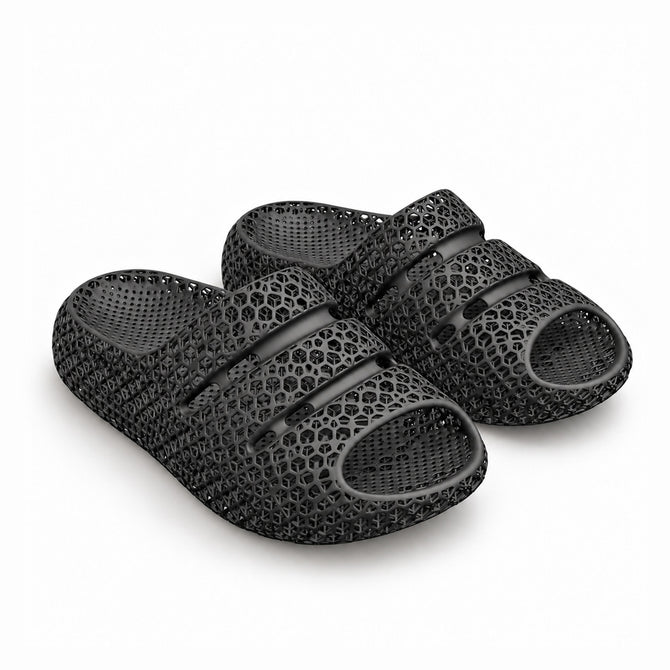
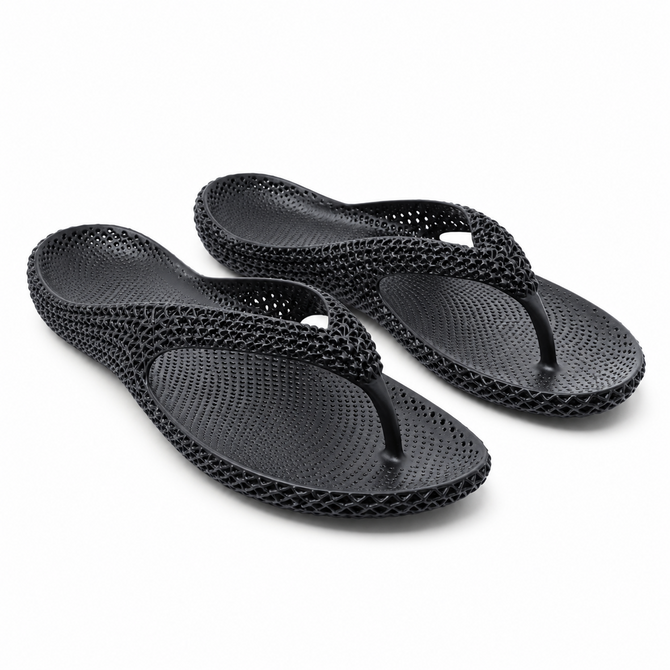
For a long time, when people thought about 3D printed shoes, one image often came to mind: lightweight footwear covered in open lattice structures and ventilation holes.
They looked futuristic, unconventional, and especially suitable for warmer weather.
But as temperatures drop, a natural question emerges:
Can 3D printed shoes evolve beyond summer footwear? Could they become part of our fall and winter wardrobes?
The answer may lie in how designers are rethinking the shape, structure, and everyday experience of 3D printed footwear.
1. Beyond the Open-Lattice Look: A New Direction for 3D Printed Shoes
One of the most recognizable characteristics of 3D printed footwear is its open, lattice-like construction.
These structures can create distinctive visual patterns while exploring opportunities for ventilation, flexibility, and reduced material use.
However, 3D printing is not limited to one particular appearance.
As design possibilities expand, footwear designers are exploring different silhouettes, textures, and structural details.
Instead of making every shoe look like a futuristic mesh clog, 3D printing can also be used to explore forms inspired by more familiar footwear.
This opens up an interesting new direction: shoes that combine unconventional manufacturing techniques with shapes that feel more at home in everyday wardrobes.
2. Can 3D Printed Shoes Become Part of Fall and Winter Fashion?
Summer footwear often prioritizes openness and airflow. Fall and winter footwear introduces a different set of design considerations.
People begin looking for:
-
More enclosed silhouettes
-
A greater sense of coverage around the foot
-
Comfortable designs for everyday movement
-
Shapes that work naturally with pants, coats, and seasonal outfits
This doesn't mean every 3D printed shoe needs to become a traditional winter boot.
Instead, it creates an opportunity to rethink how 3D printing can interpret familiar footwear styles.
Imagine a shoe with a softer, wool-inspired silhouette, a more enclosed shape, and a distinctive printed structure.
It can look very different from the open footwear designs that first introduced many consumers to 3D printed shoes.
3. Meet PollyFab's Stride Series: Exploring a New 3D Printed Silhouette
At PollyFab, we're interested in exploring what happens when innovative footwear design meets everyday life.
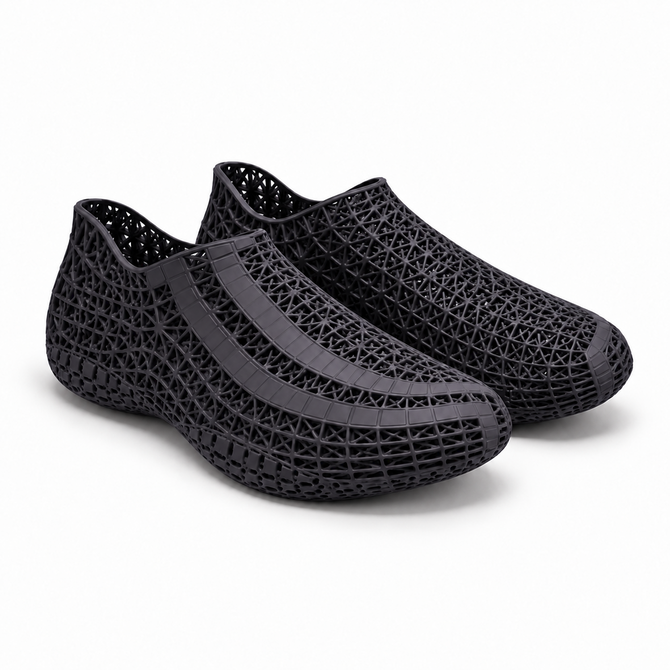
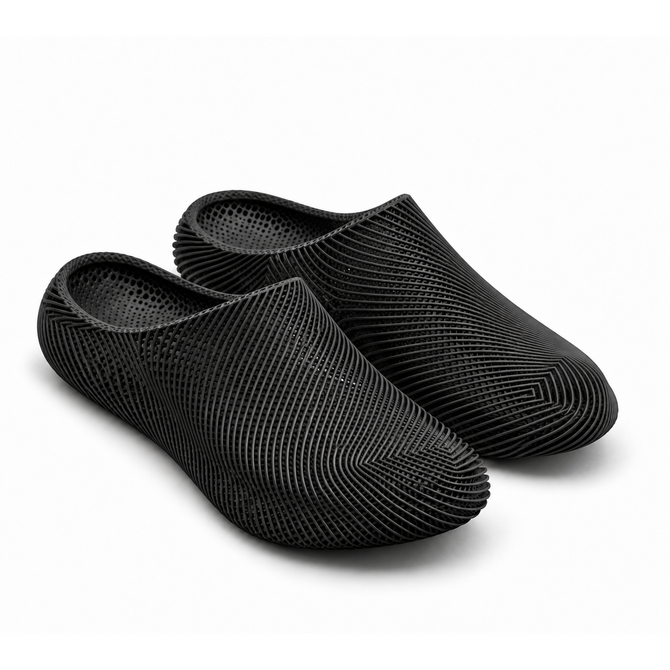
Our 2026 Fall/Winter Stride Series takes inspiration from the familiar visual language of wool-inspired footwear and reinterprets it through a fully 3D printed structure.
One detail worth noticing is the lattice structure visible around the sole.
Rather than treating 3D printing as simply a way to create an unusual-looking shoe, the Stride Series explores how printed structures can contribute to the overall form and visual identity of footwear.
The result is a different interpretation of 3D printed shoes: a design that moves beyond the conventional open-lattice aesthetic while maintaining a distinctly innovative appearance.
For us, the interesting question isn't simply how futuristic a shoe can look.
It's how new manufacturing possibilities can become part of the footwear people actually choose to wear.

4. 3D Printed Shoes vs. Traditional Shoes: What Makes the Experience Different?
A shoe can look completely different from anything we've seen before, but its appearance is only one part of the story.
When evaluating innovative footwear, there are several practical questions worth considering:
How does it feel when putting it on?
The opening, overall shape, and construction all influence how naturally a shoe fits into someone's daily routine.
How does it feel during movement?
Flexibility, cushioning, support, and the way the shoe interacts with the foot all matter.
How does the structure affect everyday comfort?
A distinctive printed pattern may look impressive, but consumers ultimately want footwear that feels comfortable and practical.
These are important considerations whether you're comparing 3D printed footwear with traditional shoes or comparing different 3D printed designs.
At PollyFab, we believe that innovation should be evaluated not only by how a product is made, but also by how it fits into everyday life.
5. Are 3D Printed Shoes Suitable for Winter?
This is perhaps the most important question for anyone considering 3D printed footwear during colder months.
The answer depends on the specific design and how you plan to use it.
Winter doesn't mean the same thing for everyone.
Some people spend most of their day indoors, moving between heated offices, shopping centers, and cars.
Others walk outdoors for extended periods in cold, windy, or wet conditions.
These environments place very different demands on footwear.
Before choosing a 3D printed shoe for winter, consider:
-
Coverage: Does the shoe provide enough coverage for your intended environment?
-
Lining: Does the design include an insulating lining or other warmth-focused materials?
-
Ventilation: How much airflow does the construction allow?
-
Weather protection: Is the shoe designed and tested for rain, snow, or wet conditions?
-
Everyday comfort: Does the fit and structure feel appropriate for your daily activities?
A winter-inspired silhouette doesn't automatically mean a shoe is suitable for extreme cold or snowy conditions.
It's important to understand the actual materials, construction, and intended use of each product.

6. The Future of 3D Printed Footwear Is About More Than Technology
The evolution of 3D printed shoes is not just about creating increasingly complex structures.
It's also about exploring new possibilities in everyday design.
We may see more enclosed silhouettes, different surface textures, alternative structural patterns, and footwear that blends naturally with seasonal clothing.
For consumers, these developments create more choices.
For designers, they create new opportunities to rethink what a shoe can look like and how it can be constructed.
At PollyFab, we see 3D printing as a way to keep exploring these possibilities.
The goal is not simply to make footwear look different.
It's to discover how innovative structures and thoughtful design can become part of real everyday experiences.
Final Thoughts: What Will Your Next 3D Printed Shoe Look Like?
When we first encountered 3D printed shoes, many of us associated them with open structures, futuristic designs, and warm-weather footwear.
Now, that visual identity is beginning to expand.
From more enclosed silhouettes to wool-inspired forms, 3D printing is opening up new directions for footwear design.
PollyFab's Stride Series is one example of this exploration.
Because the future of footwear shouldn't be limited to one shape, one season, or one way of thinking about design.
The next time you see a 3D printed shoe, look beyond its structure. Ask yourself: How could this design fit into your everyday life?
Explore innovative footwear and discover more at www.pollyfab.com.


