





Why Modern 3D Printed Footwear Is Changing Summer Comfort
There's a specific kind of discomfort that shows up every summer: the boardwalk pavement that feels like a stovetop by noon, the fifteen minutes after you leave the pool when your sandals are somehow wetter than your swimsuit, the long airport layover where your feet feel swollen and damp by the time you reach the gate.
Most people blame the weather. Sometimes the real problem is simpler — it's the sandal.
A flip flop is a basic piece of footwear, but its design still matters. What it's made of, how it's shaped, and whether air can actually move through it all affect how your feet feel by the end of the day. This article breaks down why some flip flops trap heat and moisture while others don't, what to look for when shopping for summer sandals, and how newer designs — including 3D printed, open-lattice styles — apply these ideas.
Table of Contents
- At a Glance
- Editor's Note
- Why Traditional Flip Flops Feel Hot
- What Makes Open-Lattice Footwear Different?
- 5 Features to Look for in Summer Flip Flops
- How Airflow 3D Printed Flip-Flops Apply These Ideas
- Who Are These Flip Flops Best For?
- Frequently Asked Questions
- Conclusion
At a Glance
| Step | What Happens |
|---|---|
| Why feet get hot | Solid materials trap body heat against the skin |
| How airflow helps | Moving air pulls heat and moisture away from the foot |
| Traditional foam | Dense, closed-cell structure with little to no ventilation |
| Open lattice | A web-like structure with hundreds or thousands of small openings |
| Who benefits most | Beachgoers, travelers, and anyone on their feet in the heat |
Editor's Note
This article is based on commonly used footwear materials, general design principles in athletic and casual footwear, and publicly available product characteristics. It's meant to help readers understand footwear construction in general terms, not to make medical or performance claims. Comfort is personal — foot shape, fit, and how you plan to use a sandal all affect how it feels on you.
Why Traditional Flip Flops Feel Hot

Most classic flip flops are made from a single slab of molded foam or rubber. That material is solid and closed off, which is exactly why it feels hot after a while.
When your foot rests on a solid surface, body heat has nowhere to go. It builds up between your skin and the footbed instead of dissipating into the air. Add in sweat — which your feet produce more of in warm weather — and you get a layer of trapped moisture sitting right against your skin.
That combination of heat and moisture is also why sandals can start to smell after repeated wear. Without airflow, sweat doesn't evaporate quickly. It just sits there, which creates the kind of damp environment where odor-causing bacteria thrive.
None of this makes traditional foam flip flops "bad." They're simple, familiar, and inexpensive. But if you've ever wondered why your feet feel sticky by mid-afternoon, the solid, airtight structure of the footbed is usually the reason.
What Makes Open-Lattice Footwear Different?

Open-lattice design takes the opposite approach. Instead of one solid block of material, the footbed is built as a network of small connected struts, forming a web-like pattern with open spaces running through it.
Here's why that matters in practical terms:
Air can move through the sole, not just around it. Instead of heat getting trapped against your foot, it has somewhere to escape. The open structure lets air circulate underneath and around your foot as you walk.
Weight gets distributed differently. A lattice structure supports your foot across many small contact points rather than one solid mass. This can change how pressure feels underfoot compared to a flat slab of foam.
Water drains instead of pooling. If you step out of the ocean or a pool, water doesn't sit trapped in a solid footbed. It passes straight through the open spaces and drips out, so the sandal dries faster.
The material itself is often lighter. Because a lattice uses less material than a solid block while keeping structural support, the finished sandal tends to weigh less.
None of this requires exotic technology to understand. It's the same logic behind why a mesh laundry bag dries faster than a solid plastic one, or why athletic shoes started adding mesh panels decades ago. Open structures move air. Closed structures don't.
5 Features to Look for in Summer Flip Flops
Not every "summer sandal" is actually built for summer. Here's what to check before buying a pair, and why each feature actually matters.
1. Breathability This is the difference between feet that feel fresh at 6 p.m. and feet that feel swollen and damp. A breathable design lets heat and moisture escape instead of building up over the course of a day.
2. Quick-Dry Design If you're heading to the beach or the pool, a sandal that holds water is a sandal that stays heavy, slippery, and uncomfortable. Materials and structures that drain quickly get you back to walking normally sooner.
3. Lightweight Construction Heavier sandals take more effort to walk in, which adds up over a long travel day or a full afternoon on your feet. Lighter materials reduce fatigue, especially during extended wear.
4. Comfortable Cushioning Cushioning affects how pressure feels with every step. The right amount of support can make standing or walking for hours feel less tiring, though what feels "right" varies from person to person.
5. Durability Flip flops take a beating — hot pavement, sand, saltwater, pool chlorine. A well-built sandal should hold its shape and structure instead of breaking down after a few uses.
Keep these five in mind and you'll have a much easier time comparing options, whether you're shopping for a beach trip, a vacation, or just something better than what's currently living by your back door.
How Airflow 3D Printed Flip-Flops Apply These Ideas

The design principles above aren't theoretical. They show up directly in how newer 3D printed sandals, like Airflow 3D Printed Flip-Flops, are built.
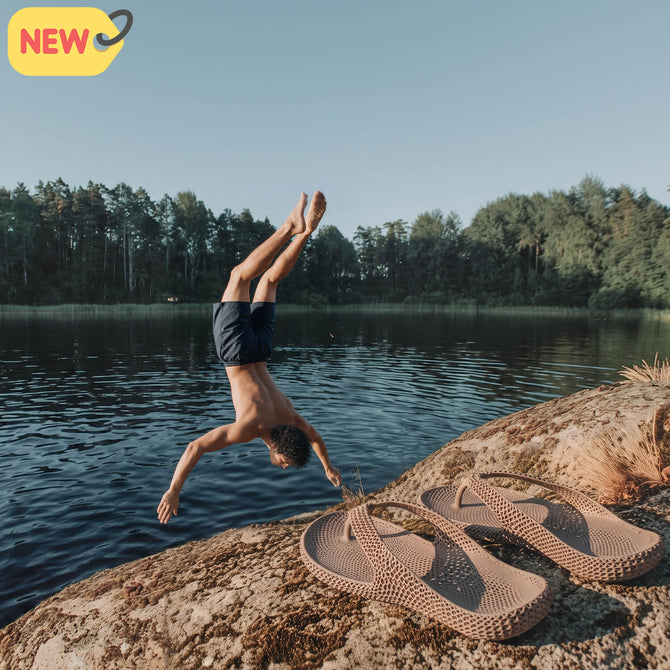
Instead of molding a solid piece of foam, Airflow's footbed is built using a one-piece 3D printed construction with an open-lattice airflow design. Rather than a slab, the sole is made of thousands of small connected struts — the same lattice structure discussed earlier, engineered specifically for footwear.
The company refers to this structure as Hyper Air™ lattice cushioning. In practice, it works the way any open lattice does: air moves through the openings instead of getting trapped against your skin, which helps address the heat buildup that makes traditional foam sandals feel stuffy by midday.
That same open structure is also why these sandals feature a rapid drainage design. With 10,000+ ventilation openings running through the sole, water from the pool, ocean, or a sudden rain shower has somewhere to go instead of pooling underfoot. That's the practical benefit of the "quick-dry" feature covered earlier — less time walking around in a soggy sandal.
Because a lattice uses less raw material than a solid foam block while still providing structural support, the sandals also end up genuinely lightweight. That matters most on the days you're logging the most steps — sightseeing, walking through an airport, or spending a full day at the beach.
The material itself is bio-based, which is worth mentioning for anyone who pays attention to what their footwear is made from, though it doesn't change the day-to-day feel of the sandal.
None of this means the sandal will feel identical for every foot. Fit, arch shape, and how much cushioning a person prefers all vary. But the underlying design — open lattice, one-piece construction, built-in drainage — is a direct application of the airflow and quick-dry principles that separate a good summer sandal from an ordinary one.
Who Are These Flip Flops Best For?
Open-lattice, 3D printed flip flops tend to work well for people who spend real time on their feet in warm conditions, including:
- Beach days, where drainage and quick drying matter most
- Pool trips, for the same reason — less time in a soggy sandal
- Travel and vacations, where lightweight construction reduces fatigue during long walking days
- Camping, when you want something breathable to switch into after a day in boots
- Everyday walking, for anyone who prefers a breathable sandal over closed shoes in the heat
- Around the house or backyard, as a comfortable, easy on-off option
That said, these sandals aren't a universal fit. Someone who needs significant arch support for a medical condition, or who prefers a closed-toe shoe for certain activities, may want a different type of footwear entirely. As with any sandal, it's worth trying a pair on and walking around before deciding it's right for your feet.
Frequently Asked Questions
Are 3D printed flip flops comfortable? Comfort depends on the individual, but the open-lattice structure used in 3D printed sandals is designed to distribute pressure across many contact points rather than one flat surface, which many wearers find comfortable for casual, everyday use.
Do 3D printed flip flops dry faster than regular flip flops? Generally, yes. Because water passes through the open lattice instead of pooling on a solid surface, these sandals tend to dry more quickly after contact with water.
Can I wear 3D printed flip flops every day? Many people do wear them daily for casual use, though how well any sandal holds up depends on your activity level and how much walking or standing you do.
Do they work well for the beach? Yes. The drainage and quick-dry properties of an open-lattice design are particularly useful for sand and water exposure at the beach or pool.
Are 3D printed flip flops easy to clean? Most open-lattice designs can be rinsed with water, since the structure doesn't trap dirt the way a solid, textured foam surface can.
Do they trap sand? Some sand can get caught in the lattice openings, but because the structure is open rather than solid, sand and debris tend to shake or rinse out more easily than they would from a textured foam sole.
How long do 3D printed flip flops last? Durability depends on the specific material and how often the sandals are worn. Bio-based and engineered lattice materials are generally built to hold their structure through regular summer use, but no sandal is indestructible.
Are 3D printed flip flops worth the price? That depends on what you value. If breathability, quick drying, and lightweight construction matter to you, the added engineering behind an open-lattice design may be worth the investment compared to basic foam flip flops. If you only need sandals for occasional, light use, a simpler pair may suit you just fine.
What's the difference between 3D printed sandals and regular foam sandals? The main difference is structure. Foam sandals are molded as one solid, closed piece, while 3D printed sandals are built as an open lattice with many small connected openings, which changes how they handle heat, airflow, and water.
Conclusion
The heat and dampness that make summer flip flops uncomfortable usually come down to one thing: airflow, or the lack of it. Solid foam traps heat and moisture against your skin, while open, lattice-style structures let air and water move through instead.
If you're looking for a flip flop that combines breathable comfort, lightweight construction, and thoughtful summer design, Airflow 3D Printed Flip-Flops offer a modern alternative to traditional foam sandals — one built around the same airflow principles that make any summer shoe feel better on a hot day.
Internal Links (Placeholders)
- Best Beach Shoes
- Summer Footwear Guide
- How to Clean 3D Printed Shoes
- 3D Printed Slides vs Flip Flops
Image Requirements Summary
| Section | Image Title | Alt Text | Placement |
|---|---|---|---|
| Why Traditional Flip Flops Feel Hot | Foot on solid foam sandal in direct sun | Foot resting on a traditional solid foam flip flop in the sun | After 2nd paragraph |
| What Makes Open-Lattice Footwear Different? | Open-lattice sole structure infographic | Infographic comparing airflow in solid foam soles versus open-lattice soles | Below the four bolded points |
| How Airflow 3D Printed Flip-Flops Apply These Ideas | Airflow 3D printed flip flop close-up | Close-up of a 3D printed flip flop with open-lattice sole structure | After first paragraph introducing product |


