





Why Do My Feet Get So Hot? How Breathable Footwear Can Keep You Cooler
You put on a new pair of shoes in the morning, and they feel great. By the time you've walked a few blocks, though, something's changed. Your feet feel warm. Then sticky. By the afternoon, you're peeling off your socks the second you get home.
It's easy to blame the weather. But two people can walk the same route on the same hot day, and one person's feet will feel fine while the other's are damp and overheated. The difference usually isn't the temperature outside. It's what's happening inside the shoe.
Why Do Feet Get So Hot in Shoes?

A few things happen at once when your feet heat up. Warm weather raises your skin temperature to begin with, and walking or standing adds more heat through muscle activity. Your feet also carry a high concentration of sweat glands, so they produce moisture quickly once they warm up.
None of that is a problem on its own. The trouble starts when that heat and moisture have nowhere to go. A shoe with a solid upper and a dense, closed footbed traps both against your skin instead of letting them escape. Sweat that can't evaporate just sits there, which is why feet can start to feel swollen, sticky, or uncomfortable well before the shoe itself shows any wear.
In other words, hot feet aren't only about the temperature outside. They're also about how well your footwear lets air move.
What Actually Makes Footwear Breathable?
"Breathable" gets used loosely in shoe marketing, but it's worth understanding what it actually means. A shoe isn't breathable just because it's made from a mesh or a lightweight fabric. Breathability comes from how well air can actually travel around your foot while you wear it.
That depends on more than the upper material. Ventilation openings, the internal structure of the footbed, and how the whole shoe is built together all play a role. A mesh upper stitched onto a solid foam sole, for instance, still traps heat underneath your foot, even if the top of the shoe feels airy.
Moisture management matters just as much as airflow. A genuinely breathable shoe doesn't just let air in — it gives sweat somewhere to go, so it doesn't sit against your skin. That's the real test of a breathable design: does it move air and moisture through the whole shoe, not just around the visible parts of it.
Breathability Starts With Structure

This is where shoe design gets interesting. Most traditional footwear, from sneakers to sandals, is built around a solid sole. Solid soles are easy to manufacture, durable, and predictable, but they're also closed off. Air can move around a solid sole. It can't move through one.
An open-lattice structure works differently. Instead of one dense mass of material, the footbed is built as a web of small connected supports with open space running between them. That open space gives air a path to travel through the sole itself, not just around its edges.
3D printing gives footwear designers more freedom to create complex open structures that can be difficult to manufacture using traditional methods. Molding a solid piece of foam is straightforward. Printing a footbed made of thousands of tiny interconnected struts, each one placed with precision, is not something older manufacturing methods handle easily. That's part of why open-lattice designs have started showing up more in newer footwear rather than older product lines.
Why 3D-Printed Lattice Footwear Is Different

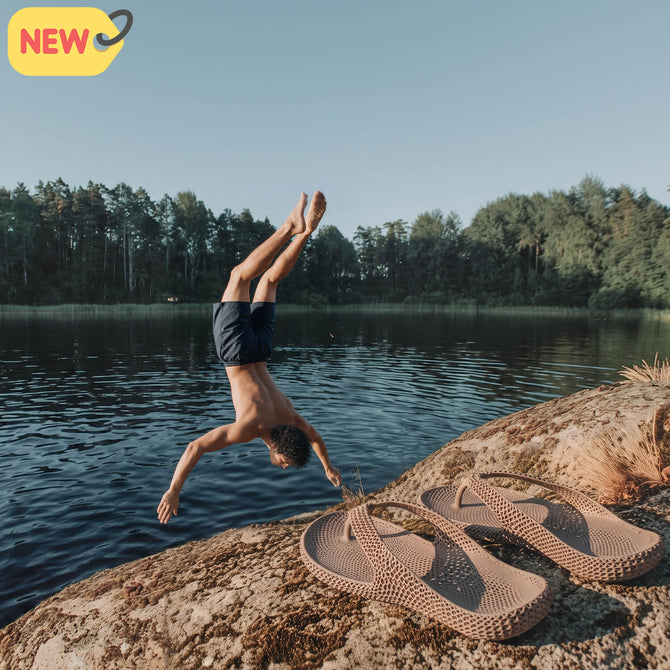
3D-printed footwear builds the shoe layer by layer, which lets designers create internal geometry that would be nearly impossible to mold or cut by hand. In practice, that often means an open lattice structure running through the sole, with air pathways built into the design itself rather than added on afterward.
That kind of structure tends to bring a few practical advantages. The open geometry allows airflow through the footbed, not just across the top of the foot. Because a lattice uses less material than a solid block while keeping its shape and support, the finished product is often noticeably lighter. Many of these structures also flex more naturally with the foot, since the printed pattern can be tuned for softness in some areas and support in others.
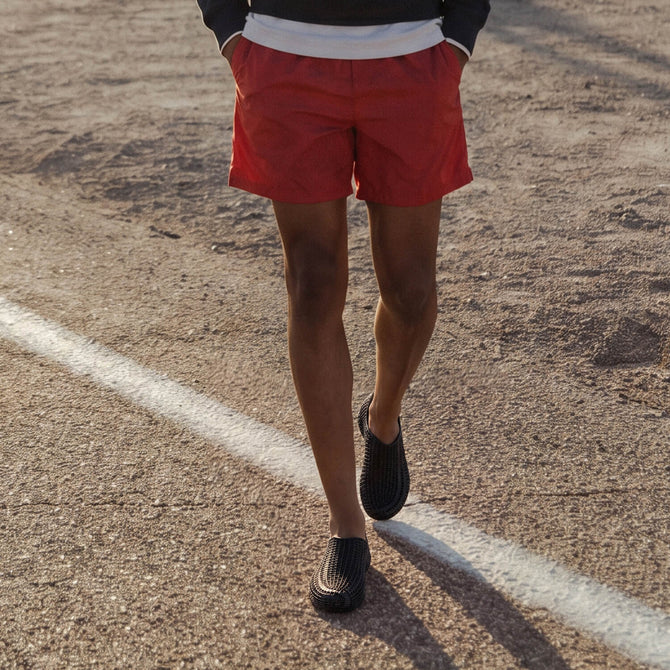
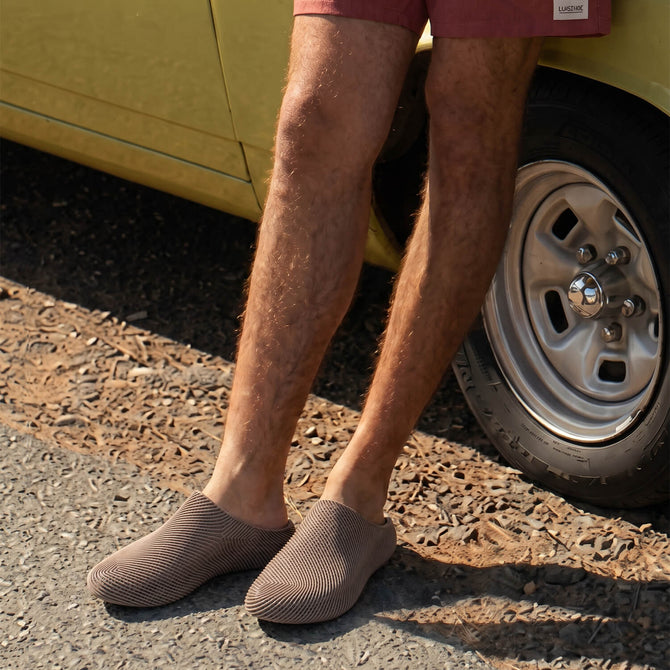
One example of this approach is Pollyfab, a footwear brand exploring 3D-printed footwear through open-lattice structures. Its Pollyfab Airpuff One slide is built from a one-piece 3D-printed lattice with a soft, flexible upper, starting at approximately 85g for a Women's 5 / Men's 3.5. That's light enough to make it an easy option for travel or everyday wear, thanks to its slip-on format and simple, pack-friendly design. For anyone specifically looking at warm-weather or water-adjacent use, Pollyfab's Airflow line applies a similar open structure aimed at airflow and drainage.
What to Look for in Breathable Footwear
Airflow — Look for open or ventilated structures, not just mesh panels, since real airflow needs a path through the shoe, not just around it.
Lightweight construction — Less material underfoot generally means less fatigue on long days of walking or travel.
Moisture management — A good design lets sweat move away from your skin instead of pooling inside the shoe.
Easy cleaning — Open or simple structures are usually easier to rinse off than heavily padded, multi-layer shoes.
Everyday comfort — Fit and cushioning still matter more than any single feature, since comfort depends on your foot shape and how you plan to use the shoe.
A More Open Approach to Summer Footwear
Hot feet aren't just a summer inconvenience you have to accept. They're often a sign that a shoe's structure isn't letting air move the way it should. Materials matter, but so does the internal geometry of the footbed — how open it is, how it handles moisture, and how much it weighs.
Open-lattice, 3D-printed footwear represents a different way of approaching that problem, building airflow into the structure itself rather than adding it as an afterthought. Brands like Pollyfab are part of that shift. If you're looking for a lighter, more open approach to summer footwear, exploring 3D-printed lattice designs may be worth considering.
Image Recommendations
1. Summer lifestyle hero image
- Where it appears: Top of article, above or near the introduction
- Alt text: Person walking outdoors in warm summer weather wearing casual footwear
- AI image prompt: A candid lifestyle photo of a person walking on a sunlit city sidewalk in summer, casual footwear visible, warm natural light, relaxed everyday mood
2. Airflow around a foot, close-up
- Where it appears: "Why Do Feet Get So Hot in Shoes?" section
- Alt text: Close-up illustration of air moving around a warm foot inside a shoe
- AI image prompt: A simple, clean illustration showing airflow arrows moving around a foot inside a shoe cross-section, soft educational style, neutral background
3. Solid sole vs. open-lattice structure comparison
- Where it appears: "Breathability Starts With Structure" section
- Alt text: Side-by-side comparison of a solid shoe sole and an open-lattice shoe sole
- AI image prompt: A flat, modern infographic comparing a solid foam sole cross-section next to an open-lattice sole cross-section, minimal color palette, clear labels
4. Macro close-up of 3D-printed lattice footwear
- Where it appears: "Why 3D-Printed Lattice Footwear Is Different" section
- Alt text: Macro close-up of a 3D-printed open-lattice shoe sole
- AI image prompt: A macro studio photo of a 3D-printed open-lattice footbed, showing the fine interconnected structure in detail, soft studio lighting, neutral background
5. Pollyfab Airpuff One lifestyle image
- Where it appears: Within the Pollyfab introduction paragraph
- Alt text: Pollyfab Airpuff One 3D-printed slide worn during casual everyday wear
- AI image prompt: A lifestyle product photo of a lightweight 3D-printed slide sandal being worn outdoors in a casual summer setting, natural lighting, relaxed pose
6. Summer travel lifestyle image
- Where it appears: Near the conclusion / soft CTA
- Alt text: Traveler wearing lightweight sandals while packing for a summer trip
- AI image prompt: A lifestyle photo of an open suitcase being packed for a summer trip, lightweight sandals placed neatly inside, warm natural light, travel-ready mood
FAQ
Why do my feet get hot in shoes? Warm weather and physical activity naturally raise skin temperature and sweat production. If a shoe's structure doesn't let air move around the foot, that heat and moisture stay trapped instead of escaping, which is what makes feet feel hot and sticky.
What makes footwear breathable? Breathability comes from more than the upper material. It depends on ventilation, internal structure, and how well air and moisture can move through the entire shoe, not just around the top of the foot.
Are 3D-printed shoes breathable? Not automatically, but 3D printing allows designers to build complex open-lattice structures that are difficult to achieve with traditional manufacturing, which can support better airflow when the design is built with that goal in mind.
What should I look for in summer footwear? Prioritize airflow, lightweight construction, moisture management, easy cleaning, and everyday comfort. Fit and cushioning still matter most, since comfort varies from person to person.


