


A shoe does more than cushion your feet. It changes how impact is distributed, how your body absorbs force, and how that force travels through your joints.
Take a step barefoot on a hard surface, and your body instinctively adjusts. Your feet sense where the pressure lands, while your muscles and joints respond accordingly.
A well-designed shoe should do more than simply soften the impact. It should help manage the forces your body encounters with every movement.
So, where does the force of each step actually go? And how can footwear influence the way it moves through your body?
Let's take a closer look at the science.

01. Every Step Follows a Diagonal Path
When you walk, your entire foot doesn't hit the ground at once.
The process follows a relatively consistent sequence:
-
Heel strike: Your heel makes initial contact, typically along its outer edge.
-
Midstance: As your body moves forward, pressure travels along the outer side of your midfoot.
-
Forefoot loading: The load shifts toward the front and inner side of your foot.
-
Toe-off: Your big toe helps generate the final push that moves you forward.
This creates a diagonal loading path, running from the outer heel toward the inner forefoot.
Two areas experience particularly high loading: the heel and the medial forefoot.
But there's another area worth paying attention to: the second metatarsal head, located near the base of your second toe.
In many people, this area experiences some of the highest peak plantar pressures during walking. The total load may not be the greatest, but it is concentrated over a relatively small surface area.
This explains an important distinction in footwear design:
The area carrying the most load isn't necessarily the area experiencing the highest pressure.
And that's one reason why forefoot discomfort is so common.
02. Walking, Running, and Jumping: Three Different Loading Patterns
A shoe that feels comfortable during a walk may not provide the same experience when running or jumping.
Why? Because different activities create different loading conditions.
In one computational study of a customized midsole, researchers analyzed three movement patterns for the same participant (height: 182 cm; weight: 84.6 kg; BMI: 25.3): walking, running, and jumping.
Three important findings emerged.
1. The key pressure areas remain relatively consistent.
Across all three activities, the heel and medial forefoot remained important high-pressure regions.
Although movement patterns changed, these areas provided consistent targets for localized footwear support.
2. The magnitude of loading changes significantly.
Jumping generated greater plantar loading than running, while running generated greater loading than walking.
In other words, the same midsole may face very different demands depending on the activity.
3. Loading duration matters just as much as loading magnitude.
Jumping involves a shorter contact period and a higher peak load. Walking generally involves a longer contact period and lower peak loading.
The challenge isn't simply how much force a shoe needs to handle, but also how quickly that force is applied.
This is why the idea of one universal cushioning solution is difficult from an engineering perspective. Different movements create different mechanical demands.
03. What a Midsole Actually Needs to Do
A midsole isn't simply designed to be soft.
Its job involves two essential functions: reducing peak pressure and managing impact over time.
Function 1: Distribute Pressure
When force is concentrated in one small area, local pressure increases.
A properly engineered midsole helps spread that force across a larger contact area, reducing pressure concentration and limiting repeated loading on specific structures of the foot.
Function 2: Manage Impact Duration
A midsole also influences how quickly impact forces develop.
By allowing controlled deformation, it can extend the period over which the load is absorbed, helping reduce peak force.
But there's a trade-off.
A midsole that's too soft may deform excessively, compromising stability and energy transfer during push-off.
One that's too firm may return energy quickly but provide insufficient impact attenuation.
The goal isn't maximum softness or maximum rebound.
It's finding the right balance between deformation, support, and energy return.
This balance is what makes midsole engineering a functional design challenge rather than simply a material selection exercise.
04. Why Body Weight, Gait, and Activity Matter
There is no single ideal midsole stiffness for everyone.
Three factors play a particularly important role:
-
Body weight: Influences the magnitude of the load the footwear must manage.
-
Gait pattern: Determines how forces travel across the foot.
-
Activity type: Changes the intensity and duration of impact.
Research involving people with diabetic feet has also highlighted the importance of sole stiffness in footwear comfort. While findings from specific clinical populations cannot automatically be applied to everyone, they reinforce an important point:
Stiffness is not just a matter of feel. It is a functional design variable.
Traditional mass-produced footwear generally relies on standardized shapes and cushioning characteristics designed to accommodate a broad range of users.
But individual feet, body mechanics, and daily activities are rarely identical.
People with unusual foot shapes, higher body weights, or long hours of standing may have very different support requirements.
This is where personalized footwear design becomes meaningful.
Instead of asking every foot to adapt to the same midsole, we can explore how the midsole itself can adapt to different needs.

05. The Pollyfab Approach: Engineering a Better Relationship Between Foot and Shoe
At Pollyfab, we believe that better footwear starts with understanding the relationship between the foot and the shoe.
Every foot is different. Body weight, foot shape, gait patterns, and daily activities all influence how forces are distributed during movement. Yet conventional footwear often relies on standardized structures designed to accommodate the average foot.
We believe there is a better way.
Pollyfab focuses on exploring how footwear can interact more intelligently with the foot — managing pressure, balancing support, and responding to the body's natural movement.
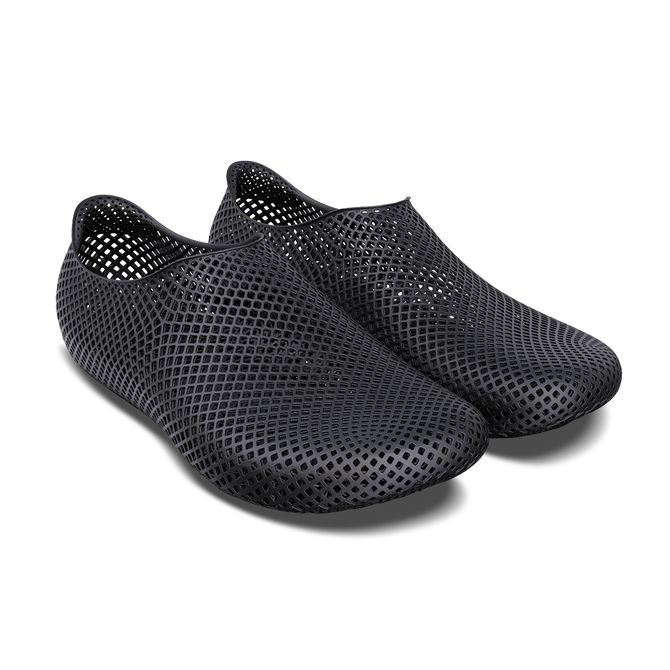
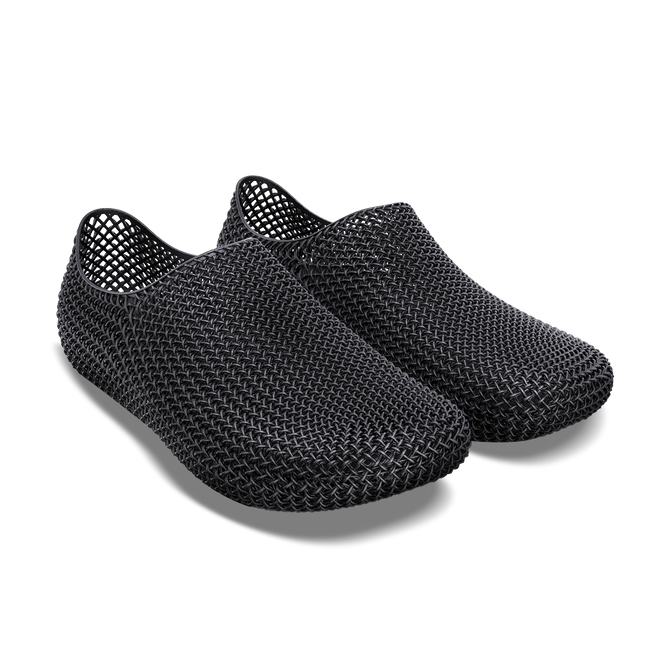
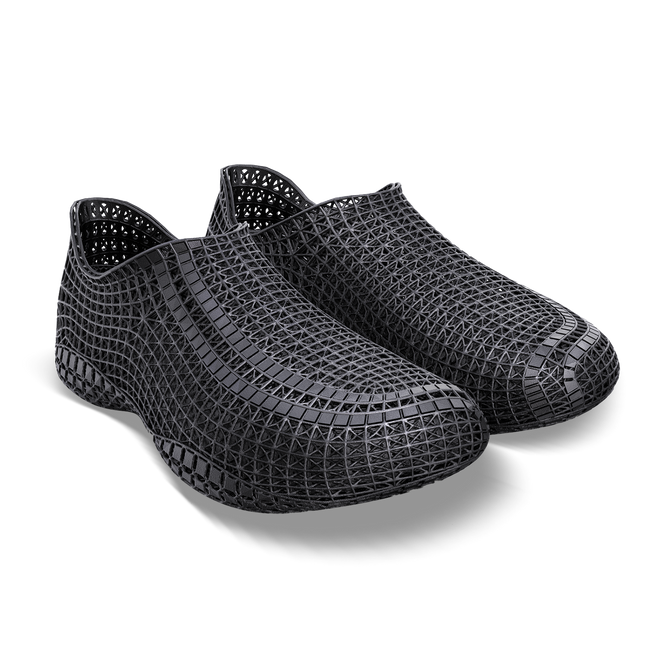
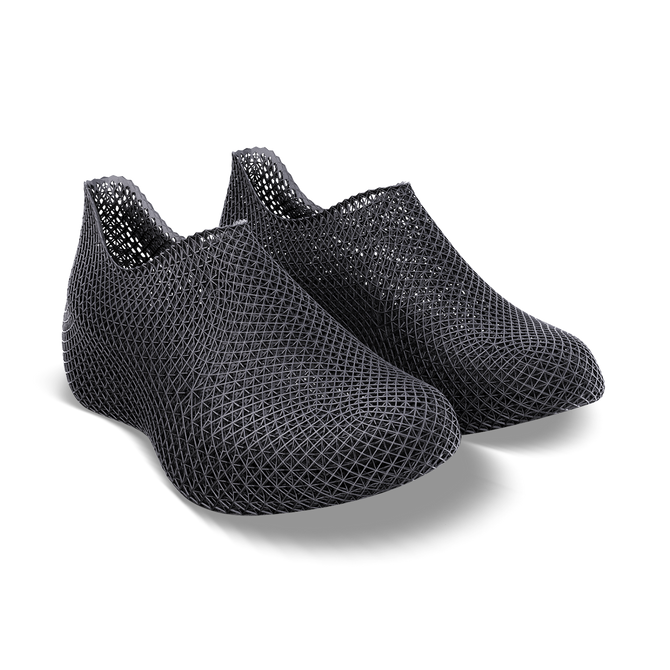
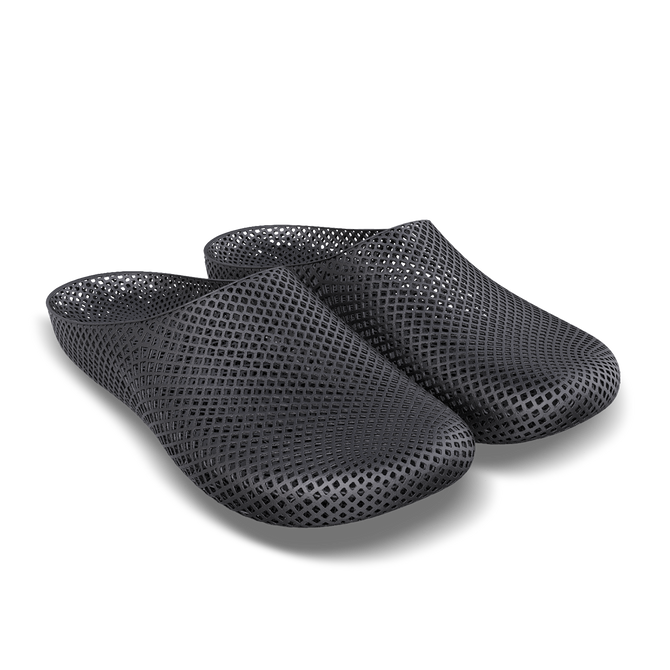
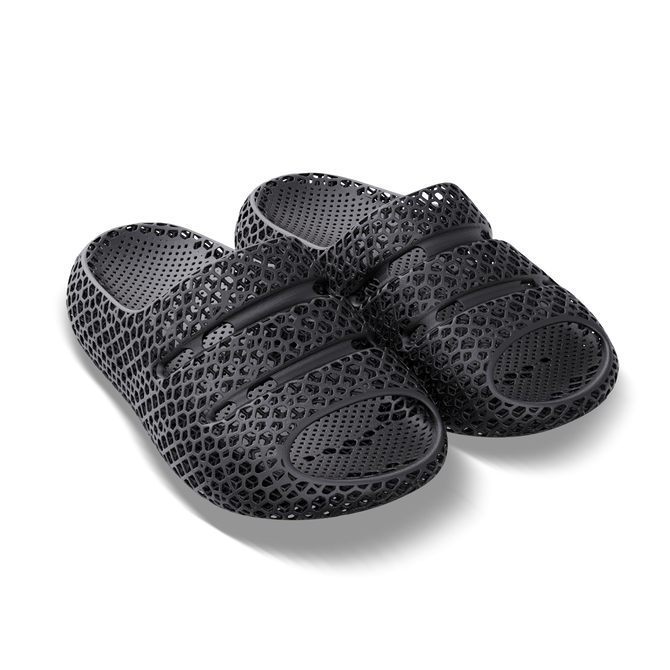
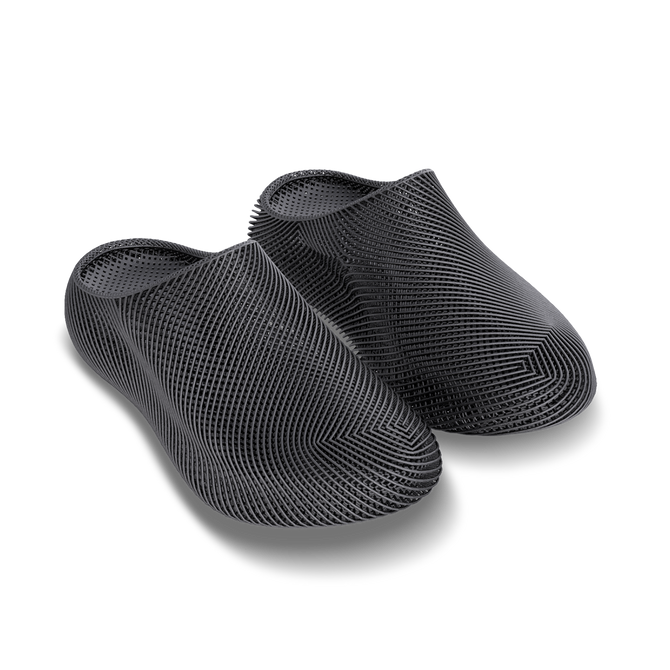
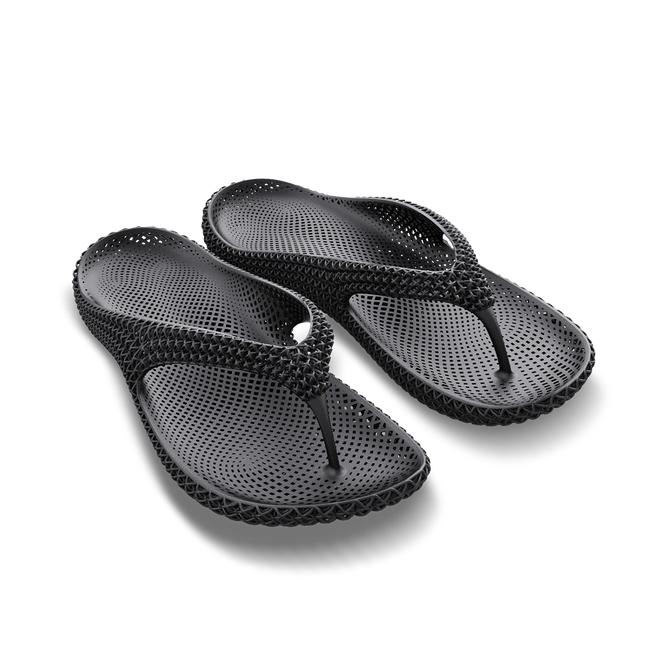
Our approach brings together biomechanical insights, material engineering, and 3D printing technology to rethink how shoes are designed.
Rather than simply making a shoe softer or adding more cushioning, we explore how different structural designs and material properties can influence force distribution.
This includes investigating:
-
Pressure Distribution: How can we reduce excessive pressure concentration across key areas of the foot?
-
Adaptive Support: How can different zones of the sole provide the right level of flexibility and stability?
-
Impact Management: How can midsole structures help absorb and distribute forces during different activities?
-
Personalized Design: How can 3D printing make it possible to move beyond standardized footwear structures?
For us, 3D printing is more than a manufacturing method. It opens up new possibilities for designing complex structures, adjusting localized stiffness, and exploring footwear solutions that conventional manufacturing may struggle to achieve.
Our goal is not simply to put more cushioning under your feet.
It's to create a more thoughtful connection between your feet, your shoes, and the ground beneath you.
Because when footwear is designed around how the body actually moves, every step has the potential to feel more natural and better supported.
06. The Journey of Force Doesn't End at Your Feet
The forces generated during walking don't stop at the sole of your foot.
Ground reaction forces travel upward through the lower limbs, influencing the mechanics of the ankle, knee, and other joints.
One important biomechanical measurement is the knee adduction moment (KAM), which describes the tendency of external forces to create an inward rotational moment around the knee.
It is widely studied in relation to knee osteoarthritis and is an important measurement in footwear and insole research.
A 2026 controlled study involving 21 healthy adults compared four footwear conditions:
-
A control shoe with a neutral insole.
-
A control shoe with a 5° lateral wedge insole.
-
A 3D-printed variable-stiffness sole, featuring a firmer lateral side and a softer medial side.
-
The same variable-stiffness sole with an additional soft heel.
The reported results were:
| Footwear intervention | First KAM peak | Second KAM peak | KAM impulse |
|---|---|---|---|
| 5° lateral wedge insole | −7.9% | No significant change | Not reported |
| Variable-stiffness sole | No significant change | −9.1% | −9.7% |
| Variable stiffness + soft heel | −10.5% | −8.6% | −11.8% |
Changes are reported relative to the control condition.
The results reveal two interesting insights.
First, different structural approaches influence different aspects of knee loading.
The lateral wedge insole primarily affected the first peak, while the variable-stiffness sole influenced the second peak and overall loading impulse.
Second, the combination of structural stiffness variation and a softer heel produced changes across multiple measurements.
This suggests that footwear design can influence more than cushioning alone.
By adjusting the distribution of stiffness across the sole and modifying heel compliance, designers can potentially influence the ground reaction force and its moment arm around the knee.
In other words, footwear doesn't just change how the foot feels against the ground. It can also influence how forces are transmitted through the lower limb.
These findings are promising, although a small study involving healthy adults cannot establish long-term joint benefits or predict the same outcomes for every individual.
The Takeaway: Better Footwear Starts with Better Force Distribution
Force cannot simply disappear. Every step generates it.
What a well-designed shoe can change is how that force is distributed — where pressure is concentrated, how impact is managed, and how loads travel through the body.
At Pollyfab, this is the science we continue to explore.
We believe the future of footwear lies in understanding the relationship between the foot and the shoe, then using biomechanical insights and 3D printing technology to create more intelligent, adaptable structures.
Not just softer shoes. Smarter footwear, engineered around the way your body moves.
Pollyfab — Rethinking the Way Shoes Work with Your Feet.


