







The 2026 Formnext Asia Shenzhen opened its doors with a strong focus on the future of additive manufacturing—and robotics quickly emerged as one of the key themes.
At the show, Bolei Technology officially unveiled RoboFab, an all-in-one additive manufacturing solution designed for robotics, attracting engineers, industry professionals, and potential partners from around the world. Live demonstrations and physical samples, including bionic muscles and robotic foot pads, drew significant attention at the booth.
For Pollyfab, a brand focused on exploring the possibilities of 3D printing and advanced additive manufacturing, developments like RoboFab highlight how 3D printing is expanding beyond traditional prototyping into increasingly sophisticated functional applications.
From Digital Design to Finished Parts

As robotics moves toward more complex and highly customized hardware, traditional manufacturing methods can struggle to keep up with rapid design changes, non-standard components, and demanding production requirements.
RoboFab was developed to address these challenges.
Designed for humanoid robots, quadruped robots, and embodied AI applications, the platform connects the entire workflow—from 3D digital models to finished parts. It supports a wide range of applications, including rapid prototypes, tooling and fixtures, bionic muscle components, and energy-storage and cushioning foot pads for robots.
At the core of the solution is Bolei Technology's proprietary HALS ultra-high-speed 3D printing technology, combined with an in-house polymer material system. Together, they enable manufacturers to move from design iteration to physical parts significantly faster.
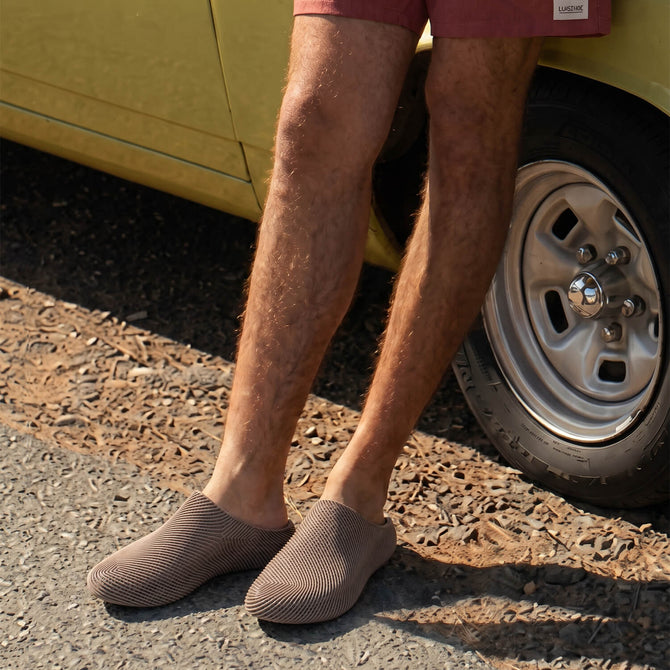
For companies like Pollyfab, which works with 3D-printed footwear and advanced printed structures, this evolution demonstrates the broader potential of additive manufacturing: the same fundamental approach of turning digital designs directly into physical products can now be applied to increasingly complex robotic systems.
One Platform, Multiple Material Needs

Robotic systems require very different types of components. Rigid structural parts need strength and durability, while functional components such as artificial muscles and cushioning systems require flexibility and elasticity.
RoboFab addresses both requirements through three proprietary material families:
-
FIRMTRIUM for rigid structural applications
-
TOUGHTRIUM for demanding, durable components
-
ELASTRIUM for flexible and elastic applications
This material flexibility allows engineers to explore different mechanical properties without relying on completely separate manufacturing workflows.
The development also reflects an important direction for the wider 3D printing industry: materials are becoming just as important as printing hardware. For brands such as Pollyfab, material innovation plays a key role in developing lightweight, flexible, and performance-oriented 3D-printed products.
Built for Rapid Robotics Development
Speed is becoming increasingly important in robotics development. Hardware teams may need to modify a component repeatedly as they test movement, load, fit, and performance.
RoboFab combines proprietary hardware, materials, and software to support mold-free iteration and sample delivery in as little as 48 hours. This makes it possible to shorten the distance between an idea on a screen and a physical part in the engineer's hands.
For robotics companies working on fast-moving projects, that means more opportunities to test, learn, and improve before entering mass production.
This rapid digital-to-physical workflow is also one of the defining advantages of modern 3D printing. From Pollyfab's 3D-printed footwear to functional robotic components, additive manufacturing continues to make product development more flexible, iterative, and digitally driven.
Beyond Prototyping
RoboFab is not positioned simply as a rapid prototyping tool. Its broader goal is to provide a full-stack additive manufacturing workflow for robotics, supporting applications from early-stage development to functional components and production-oriented manufacturing.
Just as importantly, the platform incorporates end-to-end data security and process controls to help protect sensitive 3D models and proprietary engineering information—an important consideration for robotics companies developing differentiated hardware.
As additive manufacturing continues to mature, the industry is moving toward a model where digital design, materials, manufacturing equipment, software, and end-use applications become increasingly integrated.
This shift creates opportunities across many categories, including robotics, footwear, consumer products, healthcare, and other customized 3D-printed applications.
A New Manufacturing Approach for Robotics

The future of robotics will require manufacturing technologies that are as adaptable as the robots themselves.
With high-speed 3D printing, specialized polymer materials, proprietary software, and a complete digital-to-physical workflow, RoboFab offers a new approach to developing and manufacturing robotic components.
For Pollyfab, the emergence of solutions such as RoboFab also reflects the broader direction of 3D printing: moving from a technology primarily associated with prototypes toward a manufacturing method capable of producing functional, customized, and performance-driven products.
As Formnext Asia Shenzhen continues, Bolei Technology will also participate in professional industry forums, sharing deeper insights into additive manufacturing for robotics and embodied intelligence.
For companies building the next generation of humanoid robots, quadrupeds, and intelligent machines, RoboFab represents a step toward a faster, more flexible, and more integrated way to turn ideas into reality.
For the broader 3D printing ecosystem—including brands such as Pollyfab—this evolution offers a glimpse into what the next generation of digital manufacturing can make possible.


